

Creative Writing

Linguistic Self Portrait
An essay about native languages. Or, a love letter to the English language.
“There is something about English, my English that feels private. It is easy to forget that it’s used by others. That others can understand it. Or at least somewhat. Perhaps, that impression of understanding is why it feels like such a betrayal when my writing isn’t understood exactly the way it was meant when I wrote it.
At the same time, there’s a secret pleasure in it. Like Maryse Condé’s feelings of possessiveness towards French, I feel a kind of exaltation in the singularity of my English. If no one understands it but me, it is mine and mine alone. There is joyousness in the feeling. And loneliness. But I have always been a lonely child.
I become a writer because of this loneliness. I call it loneliness, but in hindsight the word doesn’t quite seem to fit. Loneliness is passive. My loneliness is anything but. I write because my loneliness demands it. I write furiously, and with avarice, constantly searching for the perfect words to fill me. I hunger. I am hunger. I consume words, sentences, books. I consume myself. ”
Collegiate Work
Senior Thesis in English
“Reach out dead hands to comfort me”: Death and Desire in Tennyson’s In Memoriam
Abstract
Scholarship on Alfred Tennyson’s In Memoriam, in its focus on the text’s hermeneutics of loss, has largely overlooked the corpse in the elegy. Even queer readings of the text, which frequently connect the poem’s articulation of grief and death to its articulation of a physical, queer desire, oversimplify the messy reality of decay into a corpse that is a single, unified object—a representation of death, more than an active, biological process. This thesis approaches the body in In Memoriam as disorganized fragments of body-residue, exploring how the text’s articulation of desire for reunion with the dead is embodied, eroticized, and queered by this alternate conception of the corpse. Through close reading of sections of In Memoriam, consultation of other scholarly work on the poem, and historical research of Victorian deathways, this thesis ultimately imagines mourning as erotic engagement with the remains of the lost beloved, a process In Memoriam staunchly refuses to complete in its hunger for total, physical reunion with lost, loved Arthur Hallam.

Senior Project in Creative Writing

Magnolia Song
A magical realism novella about a young girl grappling with grief, generational trauma, and growing up. Inspired by elements of Filipino folklore and my childhood experiences growing up in the American South.
“Lou’s mother held her arms high above her head, palms opened heavenward to cup the cloudless summer sky. From Lou’s vantage point, her mother’s hands seemed big enough to hold the whole world. Lou wanted to run to her—to be held, too, by those hands—but Mari’s hand, warm and solid and bigger than Lou’s, kept her rooted to the spot.
The air, thick and heavy, pregnant with humidity, began to stir slowly, weaving between her mother’s extended arms. Its sluggish pace grew faster and faster, gathering clouds from the east. Lou imagined she could almost see it: whip-quick tendrils of silver flirting with the bowing branches of the magnolia trees. She shuddered with the leaves, and her sister squeezed their entwined hands. More wind carried in the sharp, sweet smell of ozone: a storm was coming. Her Mama had taught her the signs.”
Screenwriting
All The Missing Girls
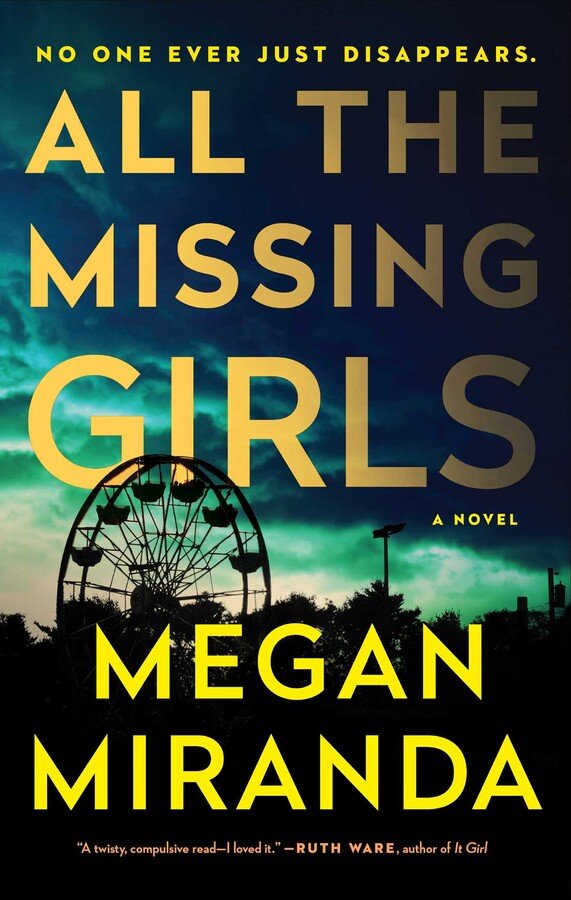
A television adaptation of the thriller All The Missing Girls by Megan Miranda.
10 years ago, Nicolette “Nic” Farrell left her hometown of Cooley Ridge and never looked back. There was nothing left for her there, after all: not her mother, who’d passed from cancer; not her best friend Corinne, who disappeared the night after the county fair and was never seen again; and certainly not Tyler, even though she once thought she’d marry him.
But when the call comes that her father is ailing, she drops everything to come back and care for him. Not long after her return to Cooley Ridge, however, a woman goes missing: Nic’s neighbor and Tyler’s new paramour, Annaliese. Nic experiences an eerie sense of déjà vu as the town’s rumor mill casts suspicion on everyone she knows.
As Nic works to uncover what happened to Annaliese, she must also confront shocking truths about her family, neighbors, and friends—and what really happened to Corinne, all those years ago.